Counter Height vs Bar Height Stools: Which Do You Need? (October 2026)
Choose counter height stools for a standard kitchen counter and bar height stools for a taller bar. Counter height seats are usually 24–27 in high, while bar height seats are usually 28–33 in, but measure your surface before you decide.
On this page (8 sections)
- Counter height vs bar height stools: what is the difference?
- How do you measure for the right stool height?
- Which stool height fits a 36 in counter?
- Which stool height fits a 42 in bar?
- How much space do stools need around them?
- Which style should you choose for your space?
- What should you check before ordering?
- Counter height vs bar height stools: which should you choose?
Choose counter height stools for a standard kitchen counter and bar height stools for a taller bar. Counter height seats are usually 24–27 in high, while bar height seats are usually 28–33 in high, but the right fit comes from measuring your surface and legroom.
The difference is usually about 4 in, enough to make the wrong stool feel cramped or leave your elbows too high. Measure from the floor to the underside of the surface, then choose a seat that leaves about 10–12 in for your legs.
A fixed 26 in stool suits many standard counters, while a 30 in stool is made for taller bars. If you use more than one surface, an adjustable stool can cover a wider range.
 Best for standard counters
VASAGLE 26-Inch Counter Height Stools, Set of 2

Counter height vs bar height stools: what is the difference?
Counter stools are shorter, and bar stools are taller. Typical counter seats measure 24–27 in high, while typical bar seats measure 28–33 in high.
The surface height usually explains the difference. Standard kitchen counters are often around 36 in from the floor, while bar-height surfaces are often around 40–42 in.
Those are common ranges, not a guarantee that a stool will fit your room. Islands, counters and built-in bars can be customized, and thick edges or aprons change the space available for your legs.
How high should counter stools be?
A counter stool seat is usually about 24–27 in from the floor. That range often pairs with a 36 in counter while leaving enough room to sit and move your legs.
A fixed 26 in seat, like the VASAGLE, falls within that common range. Its synthetic leather cover can be wiped clean, and its adjustable feet help steady it on a slightly uneven floor.
How high should bar stools be?
A bar stool seat is usually about 28–33 in high. That added height makes it a better match for a taller bar or raised counter.
The MEKLIBA stool has a fixed 30 in seat, with a back, arms and a 360 degree swivel seat. Measure carefully before choosing it for an island, since that height can put a seated person too close to a standard counter.
How do you measure for the right stool height?
Measure floor to the underside of the counter, then subtract about 10–12 in to estimate a comfortable seat height. Measure where the stool will sit, not at a nearby cabinet with a different overhang.
For example, a surface with 36 in of clearance to its underside often pairs with a seat around 24–26 in high. A 42 in surface may pair with a seat around 30–32 in high.
Check the actual clearance at the front edge, especially if the counter has a thick top, support rail or apron. Those features can reduce knee room even when the seat height seems to match.
For a full measuring walkthrough, see how to measure for bar stools. If you're comparing common counter sizes, our bar stool size guide covers fit by surface height.
Can one adjustable stool work at both heights?
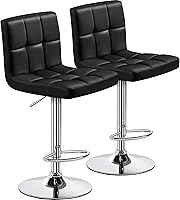
An adjustable stool can suit more than one surface if its seat range covers the measured heights. The Yaheetech stool adjusts from 25 to 33.3 in, which spans many counter and bar setups.
Set the seat so you have legroom first, then check whether the footrest feels reachable. The stool also swivels, which can make it easier to turn toward a nearby work area or conversation.
A broad adjustment range doesn't guarantee a fit at every setting. Check the stool's footprint, base and surrounding clearance, and confirm that its seat remains comfortable at the height you need.
Which stool height fits a 36 in counter?
A 24–26 in seat is a common starting point for a 36 in counter. It often leaves enough space between the seat and the counter underside for sitting comfortably.
A 26 in fixed seat is near the top of that range. Check the counter's underside and the seated person's legroom before deciding, especially if the surface has an apron.
Don't use the countertop alone as your reference. A raised lip or deep overhang may change where your knees meet the counter.
Which stool height fits a 42 in bar?
A seat around 30–32 in is a common match for a 42 in bar. A 30 in stool sits within that range, but a person's comfort and the bar's underside still matter.
The 42-inch bar stool height guide explains the measurement in more detail. Use the same check for a counter-height island that has been raised above standard height.
How much space do stools need around them?
Plan for both legroom and elbow room. A good seat height can still feel uncomfortable if the stools are packed too tightly or cannot slide out.
Leave about 24–30 in of counter width per person as a starting point. Then compare that space with each stool's seat width and allow room to turn, sit down and get up.
For a row of stools, measure the usable counter span between walls or appliances. Our guide to how many stools fit an 8-foot island can help you plan a longer run.
Also check the floor area behind the stool. A person needs space to pull it back and pass behind it without hitting a wall, cabinet or walkway.
Which style should you choose for your space?
Match the stool's seat height to the surface, then choose features for how you'll use it. A back, arms or swivel seat can affect comfort and clearance, but none can correct a height mismatch.
A backless stool can slide under an overhang more easily, while a stool with a back needs room behind the seat. Arms may help define a place to sit, but check that they clear the counter edge when you tuck the stool in.
For a fixed standard counter, the VASAGLE's 26 in seat is a straightforward option. For a taller bar, the MEKLIBA's 30 in seat is closer to a common bar-height match.
If one stool needs to serve multiple surfaces, the Yaheetech's adjustable seat covers a wider range. Set it to the surface rather than choosing a middle setting by guesswork.
What should you check before ordering?
Confirm seat height, underside clearance, stool width and the room behind the seat. These measurements prevent the most common fit problems.
Measure the surface from the floor and note its underside height at the stool position. Then compare that clearance with the stool's seat height and check whether an apron or support rail will press against your legs.
Check the stool width against the space allotted to each seat. If the stools have arms, confirm that they fit below or beside the counter edge as intended.
Finally, consider who will use the stools and how often. A fixed seat works when the surface height is consistent, while an adjustable seat can help when the room has different counter levels.
Counter height vs bar height stools: which should you choose?
Pick counter height stools for a standard counter, bar height stools for a taller bar, and adjustable stools when you need a wider fit range. Use the underside measurement and legroom to make the final choice.
Choose a 26 in seat for many standard counter setups, or consider a 30 in seat for a taller bar. If you need one stool for both, an adjustable range of 25–33.3 in may cover more configurations.
Before choosing a number of seats, measure the usable counter width and plan for spacing. The guide to spacing between bar stools is a useful next step.
Our score weighs specs, features and buyer feedback against what you're shopping for.
Frequently asked questions
What is the difference between counter height and bar height stools?
Counter height stools usually have seats about 24–27 in high, while bar height stools are usually about 28–33 in high. The right choice depends on the surface height and the space between the seat and underside of the counter or bar.
Can I use a bar height stool at a kitchen counter?
Only if the seat leaves enough room below the counter for your legs. A 30 in bar stool can feel too tall at a standard counter, so measure from the floor to the underside of the surface and compare the gap before buying.
Are adjustable stools useful for both counter and bar height?
They can work across both setups when their height range matches the measured surface. The Yaheetech stool adjusts from 25 to 33.3 in, but confirm that the seat also leaves comfortable legroom at the height you plan to use.
How much room should be between a stool seat and the counter?
Aim for about 10–12 in between the seat and the underside of the counter or bar. Measure the underside, since a thick overhang or apron can reduce legroom even when the seat height seems right.
How many stools fit along a counter?
Allow about 24–30 in of counter width per stool, then check the actual seat width and elbow room. Our guide to spacing between bar stools explains how to plan the row.